
The hottest engineering job of 2026 was invented in 2005 to work with the CIA.
Palantir built it two decades ago for customers no ordinary consultant could help. Intelligence agencies had enormous, messy problems and data no vendor understood from the outside. So Palantir did something unusual. It took strong engineers, dropped them inside the customer’s actual environment for months at a time, and had them turn a vague problem into working software while sitting next to the people who lived it.
They called the role the forward-deployed engineer. For years it stayed a Palantir thing, a quirk of selling software to the government. Then OpenAI and Anthropic rebuilt the role for the AI era in 2023. This year almost every serious enterprise AI company is hiring one, from the frontier labs to Salesforce, Databricks, and Scale AI.
The role came back for a reason. Understanding that reason tells you a lot about why your own AI effort might be stuck.
What the role actually is
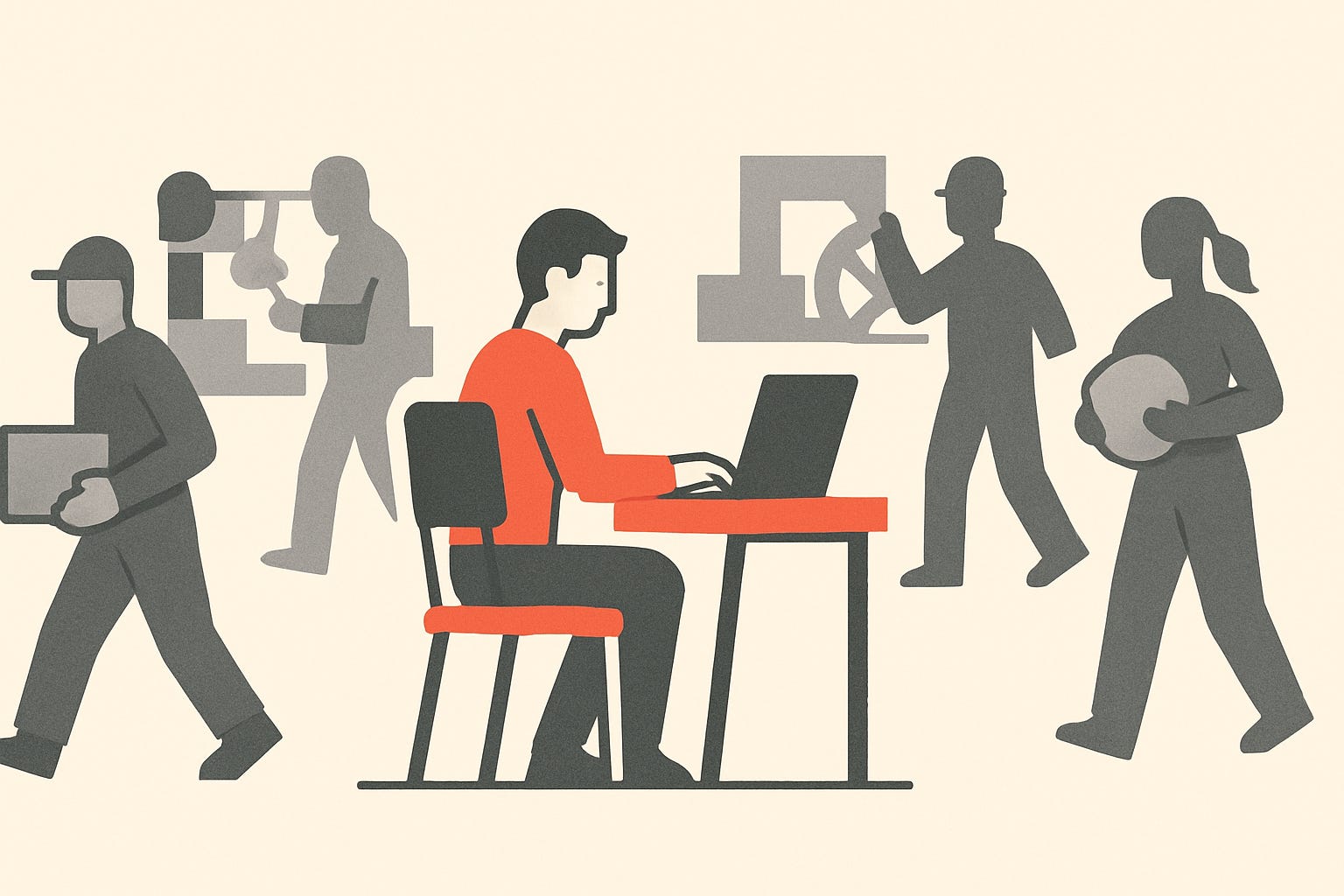
A forward-deployed engineer sits with your team, learns how the work really happens, then builds the thing that fixes it.
That is the whole job. One person who understands your business and writes the software to match, in the same room as the people who own the problem.
It sounds obvious when you say it out loud. Most companies do not have that person. They have a data science team two floors away. They have a vendor on a quarterly call. They have a slide deck that describes the problem in language the engineers never quite trust. The work crosses a wall, and something gets lost every time it does.
The forward-deployed engineer removes the wall by moving to the other side of it.
Why AI projects really fail
Most AI projects do not fail because the model is weak.
The models are extraordinary. They can draft, summarize, classify, and reason at a level that would have looked like science fiction three years ago. When a company’s AI effort stalls, the model is almost never the reason.
They fail because no one translated a real business problem into something the technology could solve. The gap sits between the messy way work actually happens and the clean way a model expects to receive it. Someone has to stand in that gap and do the translation, again and again, as the real edge cases surface and the neat plan meets the ugly reality.
That is the gap the forward-deployed engineer closes. They close it by living in it. They see the exception the process document never mentioned. They watch the person who does the job find the workaround nobody documented. Then they build for the work as it is, not the work as the org chart imagines it.
You probably do not need a bigger model
If your AI effort keeps stalling, the instinct is to reach for more technology. A better model. A new platform. Another pilot.
The more useful move is usually the opposite. You probably do not need a bigger model. You need one person who understands both the work and the tools, sitting with the team that owns the problem.
You can hire that person. You can borrow them from a partner for a few months. You can grow them from inside by taking an engineer who already gets your business and giving them room to sit with a team and build. The title matters far less than the seat. What matters is that someone with real engineering judgment is close enough to the problem to feel it, and trusted enough to ship the fix.
What this means if you run a company
Look at your last AI project that went nowhere. Trace it back.
There is a decent chance the problem was never technical. The idea was sound and the tools were capable. What was missing was a person who sat with the business long enough to understand the actual problem and had the skill to build the actual answer. The effort died in the translation layer, in the handoffs between people who understood the work and people who understood the software.
The companies pulling ahead with AI put a capable builder inside the problem and keep them there. Model size is rarely what separates them from the ones still stuck in pilots.
If your AI effort keeps stalling, ask who on your team actually sits with the business and writes the code. If the answer is no one, you have found the hire you are missing.
Reply and tell me where your AI efforts have gotten stuck. I am seeing the same pattern on almost every engagement, and I want to know if it matches what you are living.